Lighthouse Customized IR 780NM LED Module for Medical Machines and Thermal Imaging Equipments
Infrared Light Emitting Diode (IR LED) is a semiconductor device that efficiently converts electrical energy directly into infrared radiation (non-visible light that the human eye cannot see). Unlike ordinary LEDs that emit visible light, IR LEDs use specific semiconductor materials (such as gallium arsenide or aluminum gallium arsenide) to produce wavelengths typically ranging from 700 nanometers to 1 millimeter within the infrared spectrum.
PN Junction Structure: An IR LED is formed by P-type and N-type semiconductor materials creating a PN junction.
Carrier Recombination: When a forward voltage is applied, electrons in the N-region and holes in the P-region move towards the PN junction area and recombine.
Photon Emission: During recombination, the energy difference is released in the form of photons (in this case, infrared photons). The specific wavelength emitted can be precisely controlled by selecting different semiconductor materials.
Invisibility: They emit light that is invisible to the human eye, making them ideal for applications requiring covert light sources (such as security surveillance).
High Efficiency and Energy Saving: They can efficiently convert electrical energy into infrared light, resulting in relatively low power consumption.
Long Lifespan and Reliability: As solid-state devices, IR LEDs have a very long operational life (often tens of thousands of hours) and high durability.
Strong Directionality: The infrared beam has good directionality, making it easy to focus and direct the transmission for precise control.
Fast Response Speed: They can turn on and off quickly, which is highly suitable for data transmission and signal control purposes.
Remote Controls: One of the most common applications, used for transmitting infrared control signals for TVs, air conditioners, and other home appliances.
Security Surveillance: They provide invisible illumination for night vision cameras, enabling the cameras to capture clear images in dark environments.
Photoelectric Switches and Sensors: Used in sensing devices (like automatic doors, smart sensor lights) for obstacle detection or position sensing.
Data Communication: Applied in short-range infrared data transmission (such as data exchange between certain older phones and PDAs) and fiber optic communications.
Medical Devices: Used in certain health monitoring devices (like pulse oximeters) and physical therapy equipment.
Touch Screen Technology: Positioned at the edges of resistive or capacitive touch screens to detect the touch point.
Specifications:
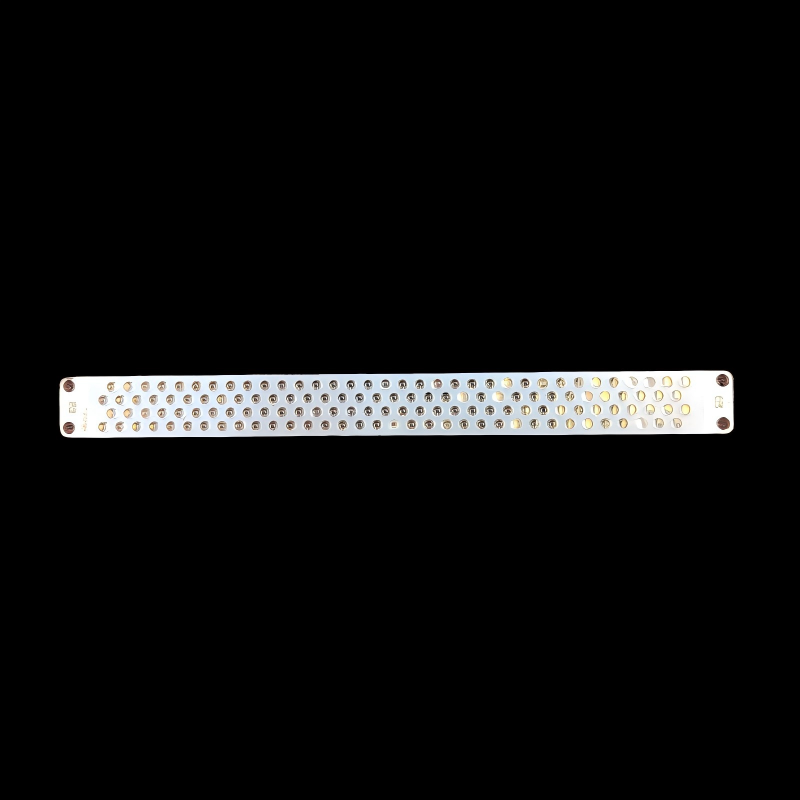
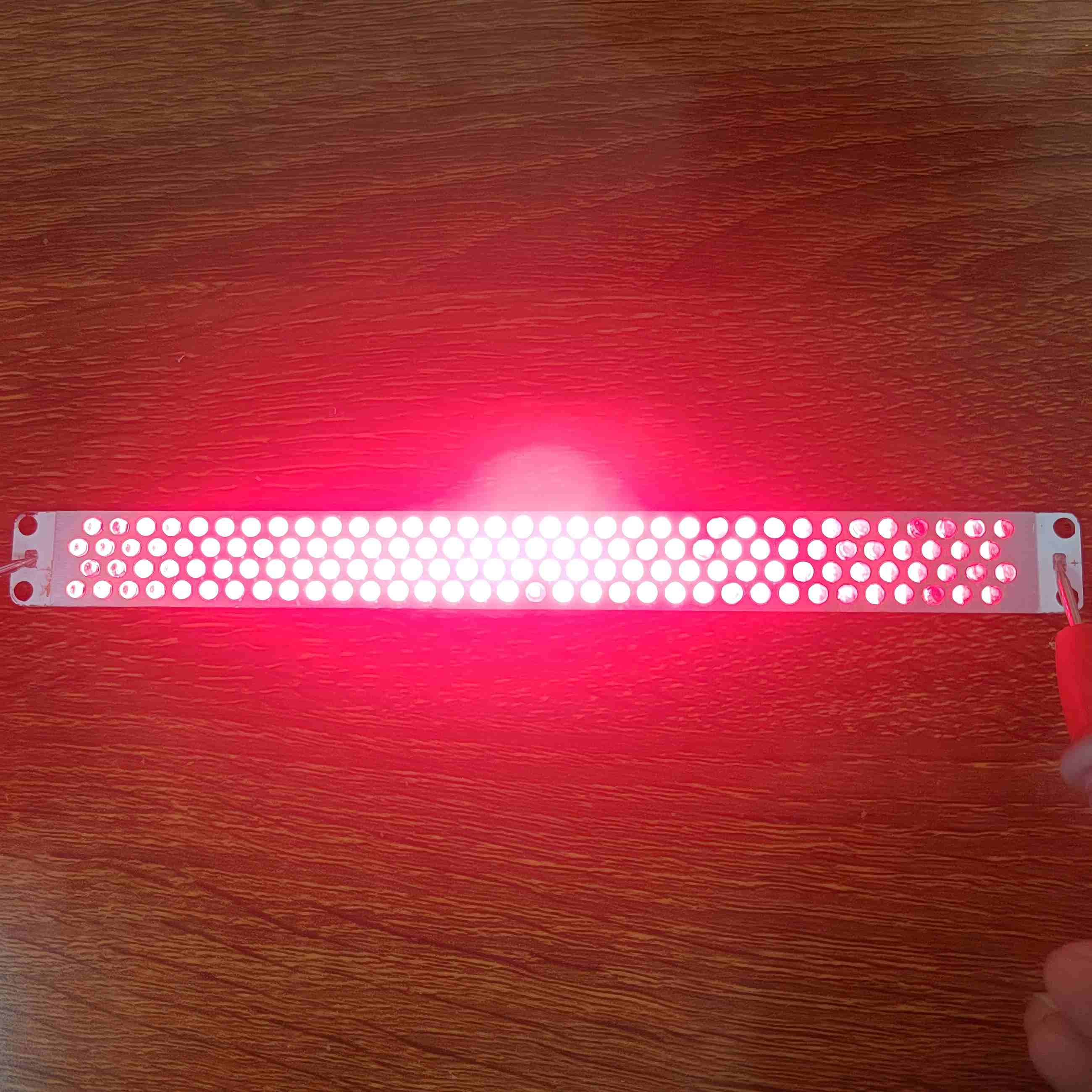
| Size : | 175*16*4.7 mm |
| Wavelength : | 735-745 nm |
| VF Voltage : | 32-42 V |
| IF Current : | 5600 MA |
| Light Power : | 95,000-105,000 MW |
Specifications:
| Size : | 175*16*4.7 mm |
| Wavelength : | 735-745 nm |
| VF Voltage : | 32-42 V |
| IF Current : | 5600 MA |
| Light Power : | 95,000-105,000 MW |